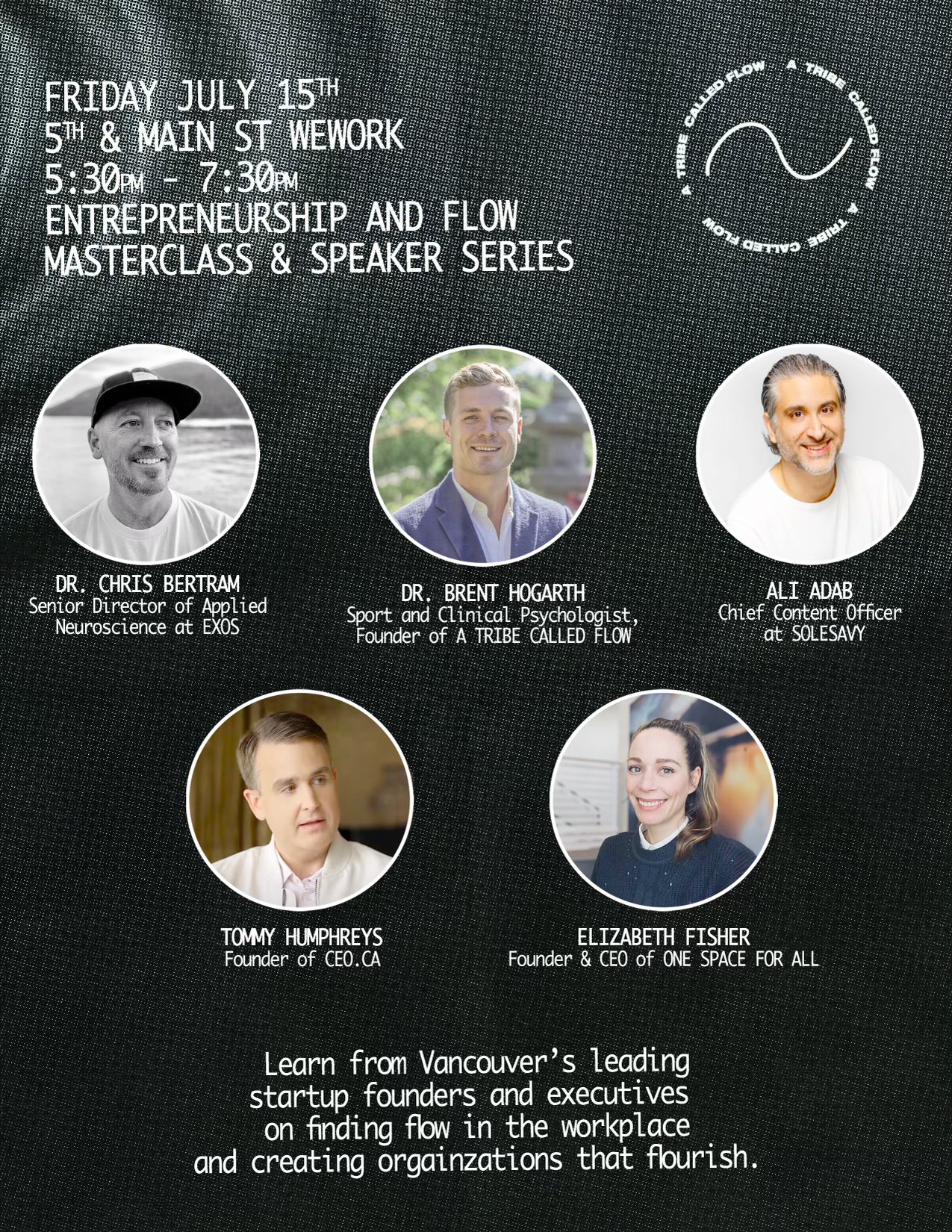
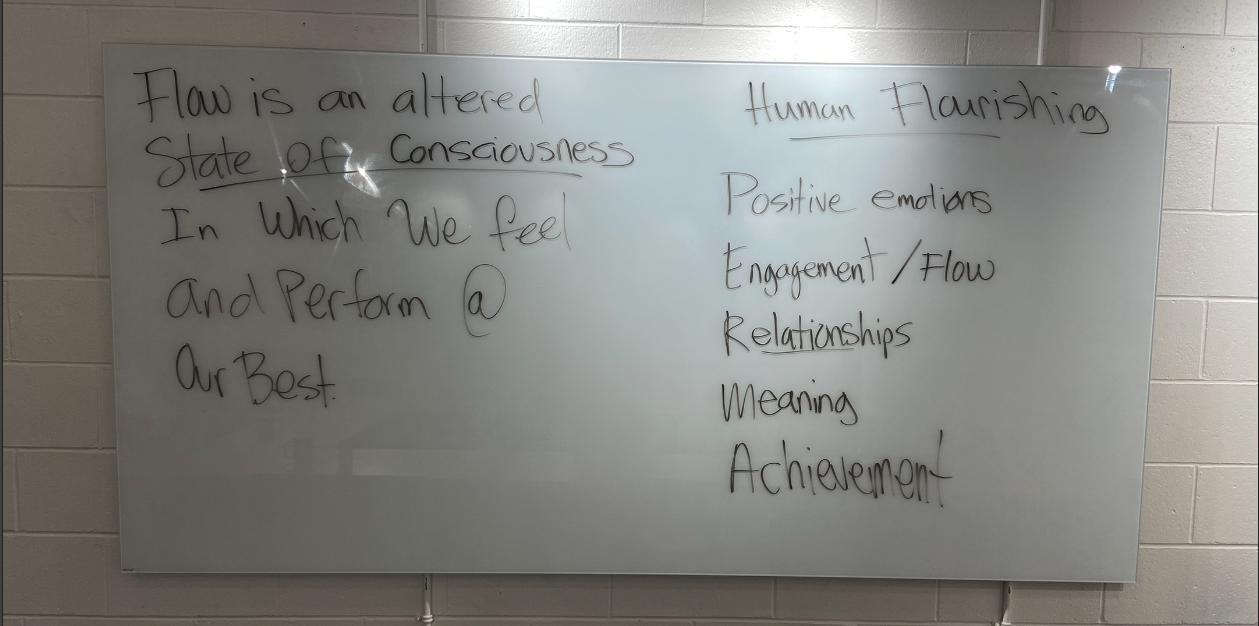
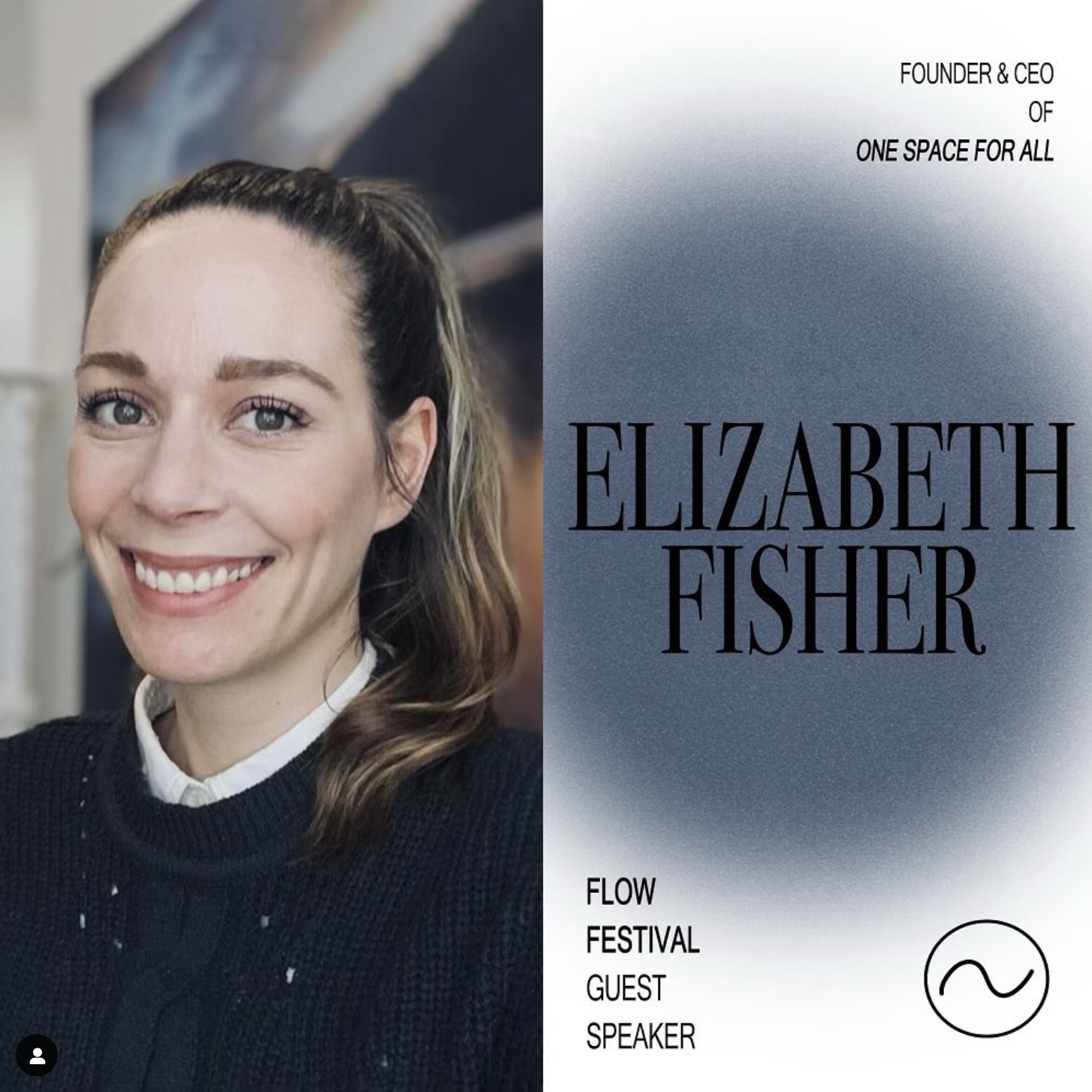
Elizabeth Fischer talked about perceptions of work, work life balance, and toxic attributes that affect performance, such as the expectations we put onto ourselves or are administered by our superiors. Her mission, from what I could gather, is to assist in helping others remove mental blockers to acheive flow in their respective fields. She operates a comfortable workspace that lives this mission, while supporting tenants through a mixture of coaching, counselling, training, cognitive behavioural therapy, mindfulness, and self care.
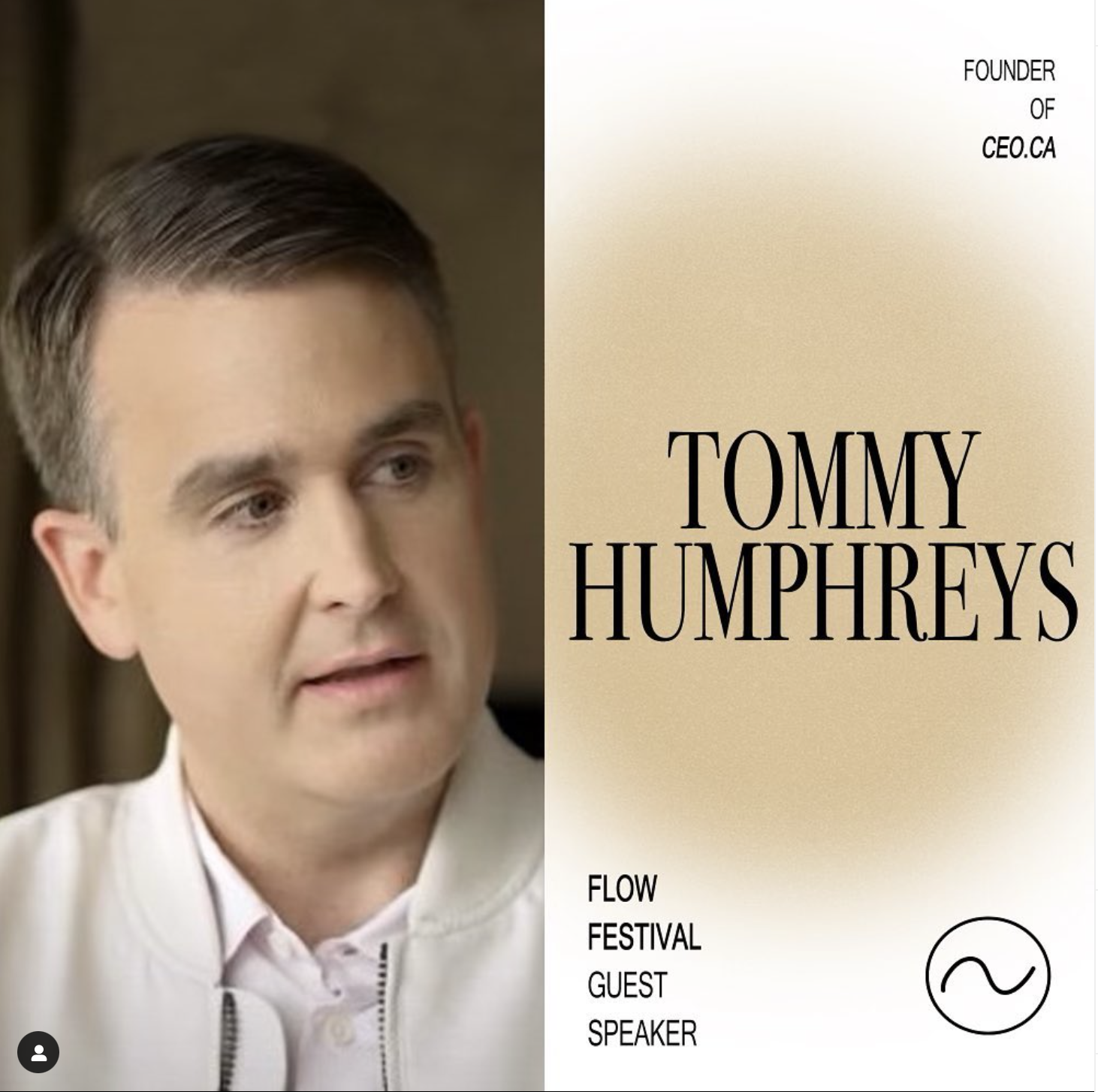
Tommy Humphries, owner of CEO.ca, told a candid story about his own upbringing, personality quirks, and career evolution. It was interesting to hear someone in his position being completely honest about the good, bad, mediocre, self-destructive, and ambitious attributes that got him to where he is. I think it’s important for professionals, especially executives, to create a norm of vulnerability. Knowing full well that organizations are staffed and lead exclusively by humans reinforces the idea that we do need to interoperate as a team. While it’s not my story to tell, everything from family dynamics to substance use informed his journey. What I liked about Tommy’s story was that it was friendship and peer support that helped to uplift him from a difficult rut in his life and reframe his professional objectives, landing him where he is now. He had one quote that stuck out to me which is:
“Just because I had a thought doesn’t mean it was a good one.”
Impulsivity, arousal, curiosity, and discipline are hard for everyone to navigate and our brains, while powerful, are also somewhat error prone. He left with a rhetorical question that will bring us into our next section, but it’s worth taking a moment to think about:
What do you do to overcome your own insecurities?
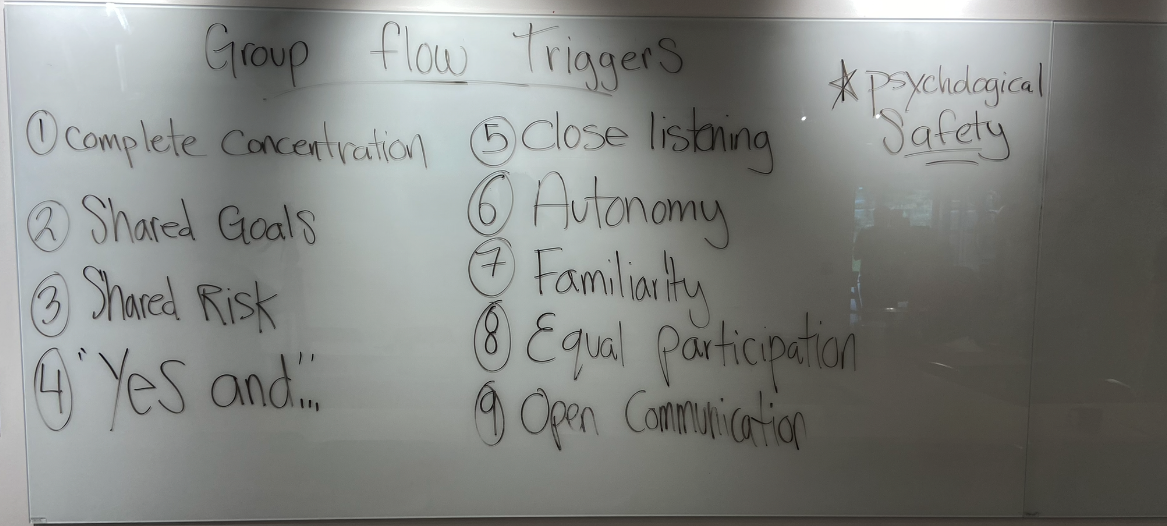
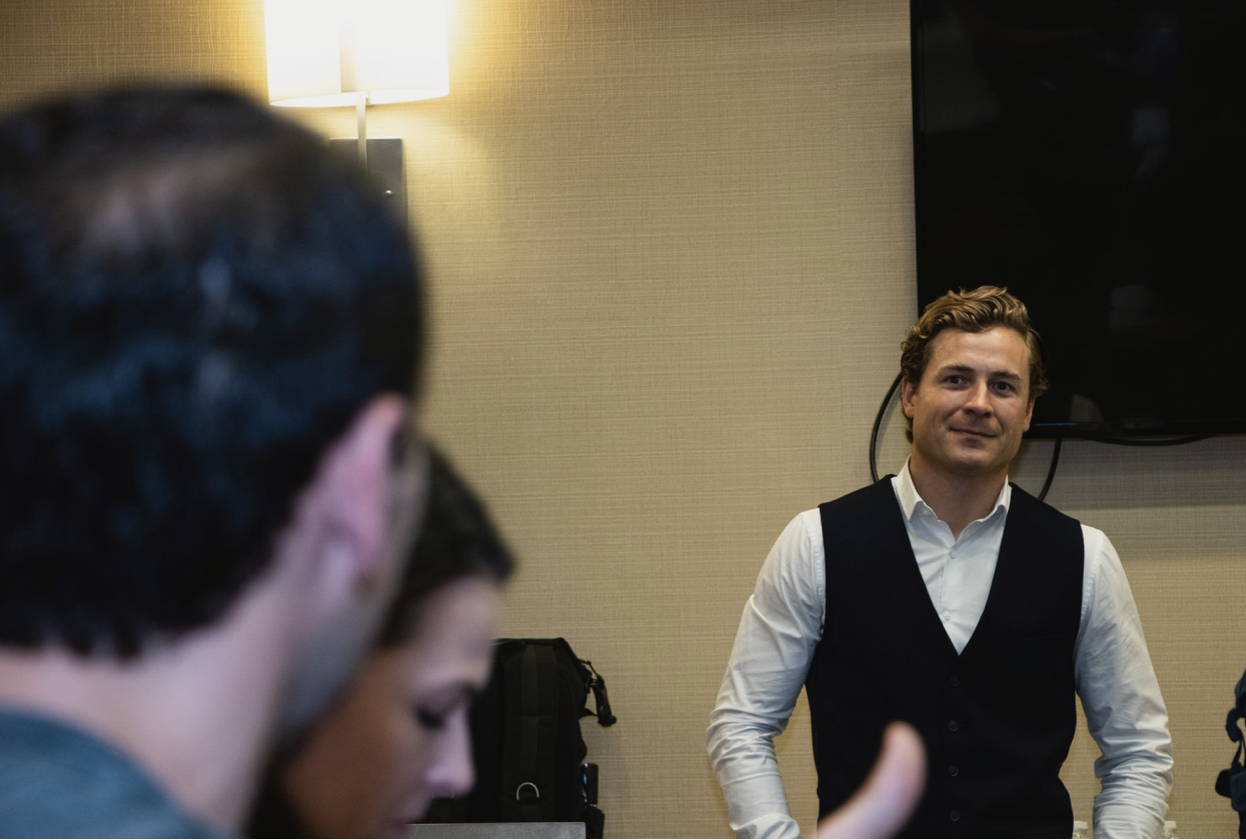
Throughout the evening the floor was opened up to the audience to expand on some of the core themes in groups. Below is a summary of the takeaways. This is a mixture of notes from the audience and personal reflection.
Takeaways
Trained Instinct
It’s very hard to acknowledge or manage emotional responses when we come up against challenging events or stimuli. They tend to sucker punch us when we least expect it. Learning to anticipate this, and develop an ability to proactively tolerate stress or discomfort is often just a learned behaviour or trained instinct. While we may not know where or when these impulses will sneak up on us, we can prepare ourselves for the fact this may happen.
Routine
On top of training ourselves to handle unpredictable adversity, we can prepare our bodies to buffer elements like the autonomic nervous system flaring up through sleep, nutrition, exercise, and mindfulness practices. Furthermore, we can practice our social skills to better understand the people around us in order to build empathetic bridges for a variety of personality types. The more we can understand the psychology of others around us, while taking care of ourselves as individuals - the less dramatic our responses will be to stress, and presumably will help enable our ability to achieve flow states.
Take a step back
This is one of those easier said than done things I would imagine. Especially when the moment itself can be overwhelming. I assume this refers to a logical ability to cross reference like stressors with a prior memories of conflict resoltuion from a similar circumstance. Or, being able to admit to others that you may not have all the answers immediately and need more time to perform due diligence. By separating our moods from our stressors or conflict, we increase our ability to nagivate them towards an amicable resolution.
Mindfulness
There are leagues of literature around the cognitive benefits of mindfulness practice, the techniques one can employ, and ways of integrating mindfulness into everyday life. To avoid going into specifics, mindfulness in things like breathing exercises, constructive self talk, meditation all can help us shift our focus from a reactive approach to situations to a proactive approach by slowing down our mind and our nervous system, and training our behaviour to focus more on priorities than events, often occurring at random.
Peer support
We are not in life alone. There are many people, of every variety, with different backgrounds, who have shared similar experiences, been through worse experiences, know how to navigate consequence or complexity, or know how to live a positive life. Peer support is a way to share notes, evaluate our experiences with others, and hear about others lived experiences. In doing this, it humanizes the way we experience reality by being able to understand it from the perspectives of others, and contributing our own inputs in order to broaden our horizons on topics like situation management and preparation.
Resilience
Never the easiest piece of advice to give someone, especially when they are hurting but - you can do it! Grit is real. This is not to say that people don’t become emotionally compromised or can necessarily avoid things like psychiatric complications. It is to say that resilience in the face of adversity is totally possible. Building on the routine step mentioned before, it’s interesting to think about routine as the tool to build resilience. Holding a yoga pose for a long time and focusing on breathing? That’s resilience training. Pushing yourself to go 0.1km further every week to train for a marathon? That’s resilience training. It’s not explicitly physical either, and should be discussed in a lot of different arenas. Avoiding going to the bar to study for a unit test in school? Guess what. It can be developed through routine, repetition, and experience. Let’s acknowledge it for what it is!
Active Listening
The best way that I’ve heard this described is to effectively get out of your own way. As Celeste Headlee puts it,
“A conversation requires a balance between talking and listening and somewhere along the way we lost that balance…”
“...there is no reason to learn how to show you are paying attention if you are, in fact, paying attention”
-Celeste Headlee