Is this the most important element on a project?
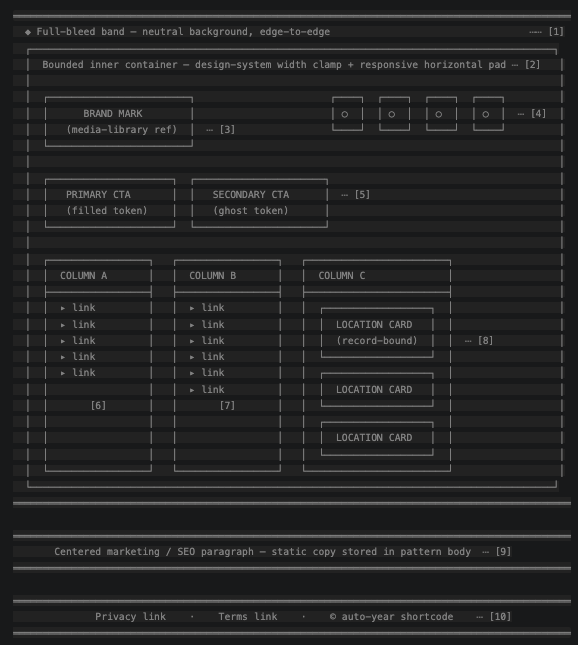
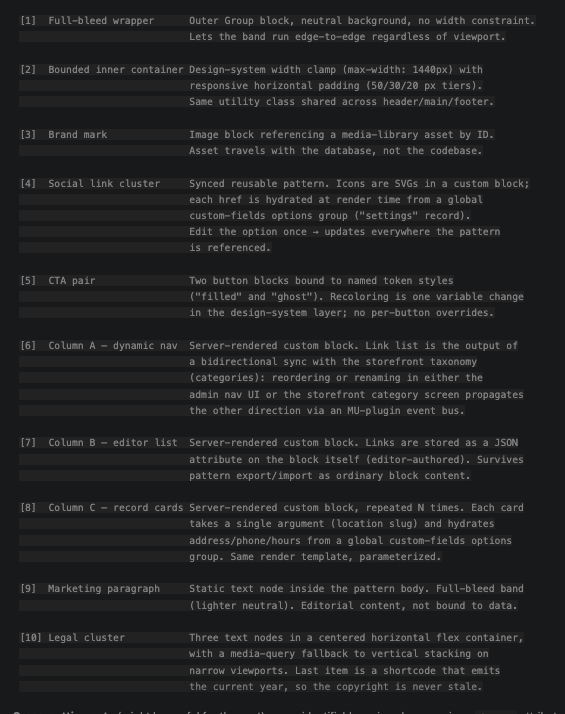
Not really. But that's the whole point. Finding elements like the footer, which factor in:
- business intelligence
- design systems and general prowess
- relay of objectives to technical stakeholders in
- a manner that is scoped and time-boxed such that
- functionality, aesthetic, and objectives can be tested
Is a great way to align entire projects. If thought about from the lens of:
- Developing strong operational foundations
- Learning how to communicate/delegate amidst a multidisciplinary and skill-divergent team
- Using experience to refine efficiency such that
- The person who is paying you gets what they want
This type of groundwork activity actually allows for the types of decisions to be made like AI usage on a project or compute-based specifics. You have to get started!
A couple of our notes from this footer activity to bring the point home:
Getting everyone together on a common objective showcased friction between development prerequisites and aesthetic objectives. Both entities could produce their work but complications emerged once it was integrated.
None of this was unmanageable, but it's important to note that enacting this on a straightforward feature gave us critical insights that would drive forward the remainder of the project. Here's the real kicker...
The roles of AI and LLM use were more effective for inspection, documentation, and versioning than they were for code injection into existing paradigms on a CMS
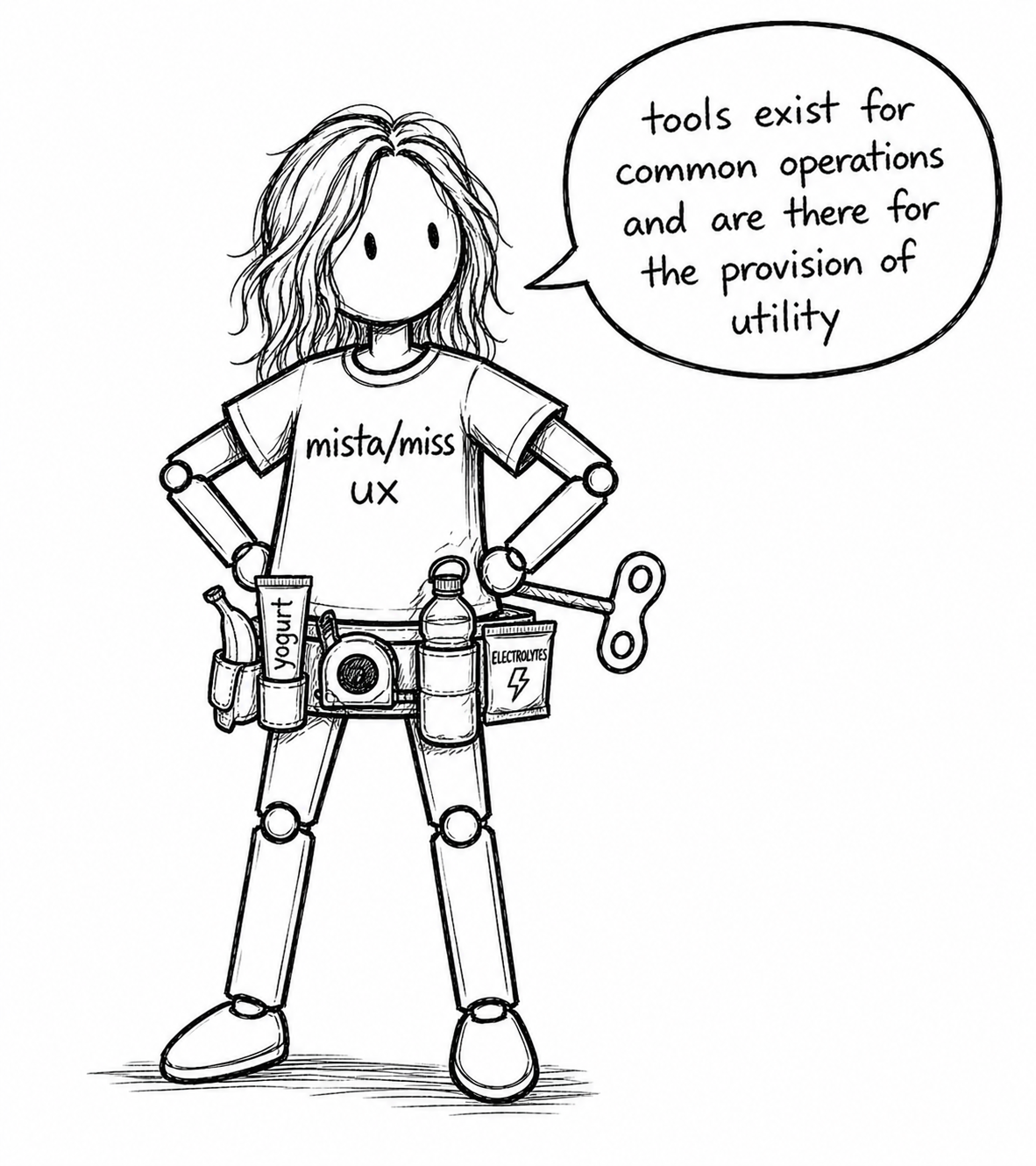
We started off using Figma's MCP to test out portability between aesthetic and code. By running these simple tests, we saw that artifcating and corruption were more rampant than simply configuring assets ourselves. This meant that (in our context of this one feature, mind you) these tools were better deployed for inspection.
Once a feature in the footer was ready, we could inspect and catalogue its core attributes using AI.
Instead of slandering the tools, it's simply worth acknowledging that their optimal role within our workflow was vastly different than original expectations. From this experience, early on, on a fairly minor issue we were able to align team and project in a manner that was much more constructive.
- What is the order of operations for developing UI patterns in a block-based builder?
- When is the right time to stop designing and make a formal request to development due to a databasing requirement?
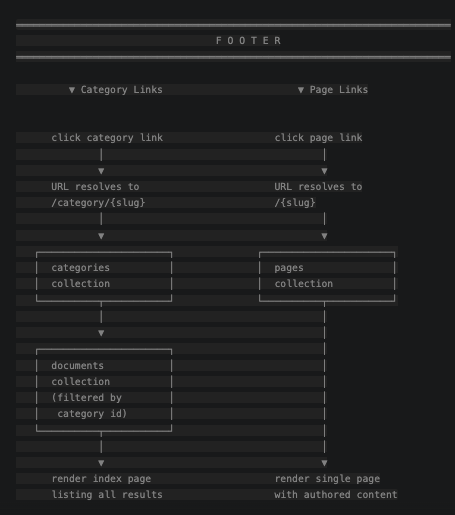
- How do the routes exhibited in the footer become content authoring deliverables later on in the project, and who is responsible for them?
- How do these content generation activities inform broader considerations in applications like information design implementations and the roles of taxonomical hierarchies/categorization?
- How does the cascade of effort in one activity inform the communications strategy, documentation approach, and test planning ethos such that end-to-end testing can be planned for iteratively?
In this case: Jiro Ono was right ⚔️
Focus on essentials, quality, and timing.
It's amazing what can come out of working to perfect the ordinary, as opposed to constantly scanning the horizon. For us, focusing on getting the footer developed properly calibrated our team and client, and gave us deeply useful insights that would govern the remainder of the project.