As test suite grows, we can optimize by:
- Running only tests related to changed files (lint-staged)
- Moving slower tests to pre-push hook
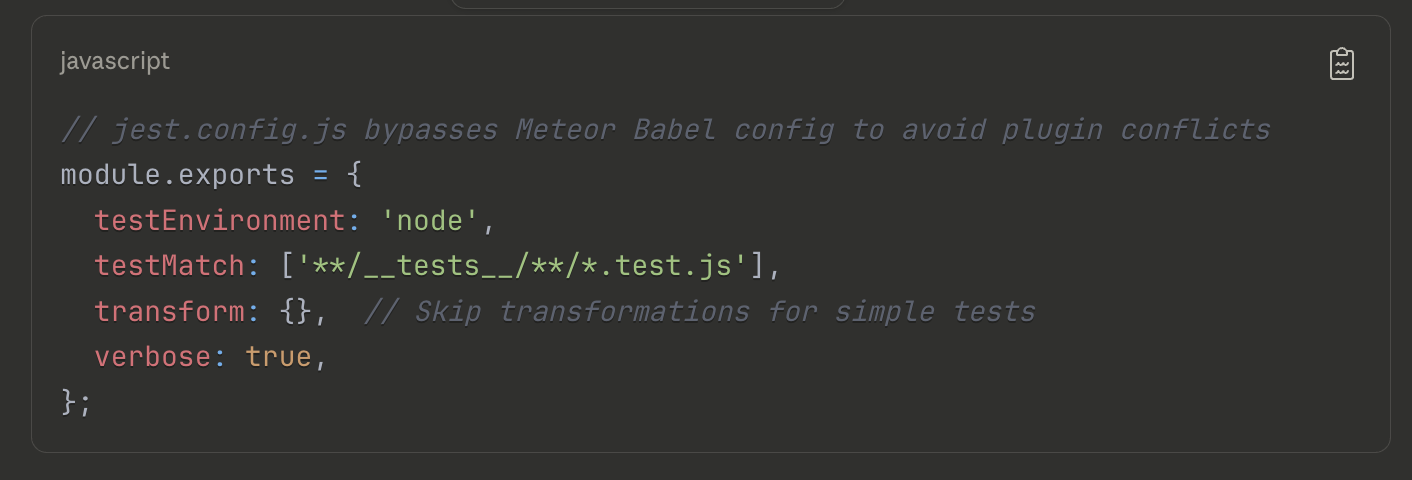
- Parallel test execution
- Strategic test splitting
Merging Structure Across Branches
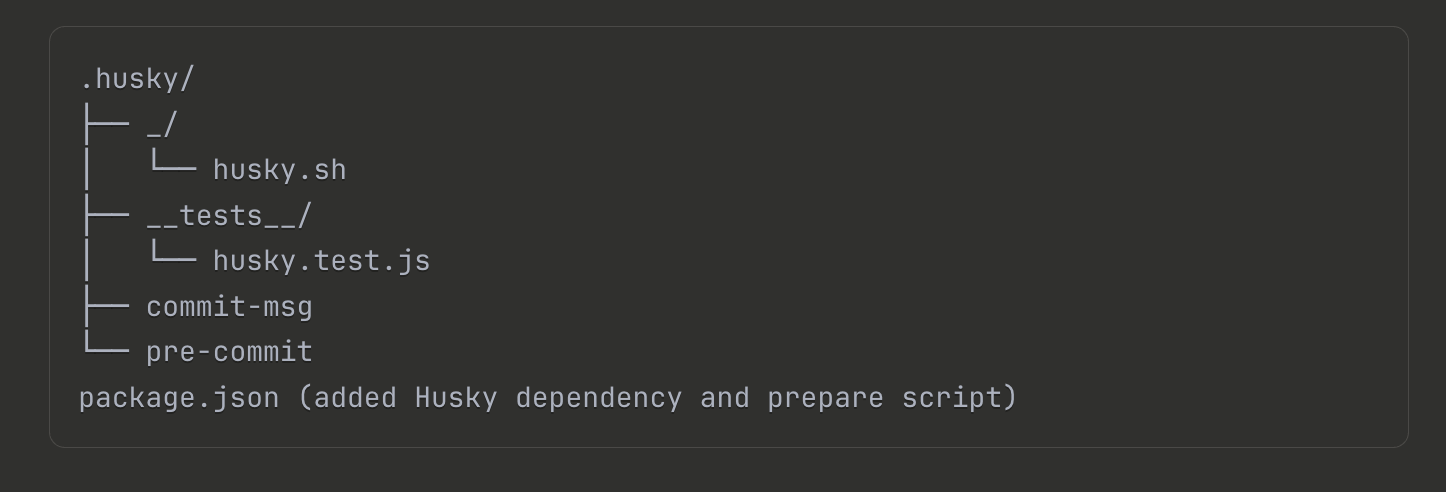
Current state: This infrastructure exists only on the production branch.
Next steps: Merge this structure into staging and qa branches to create consistency:
Staging branch:
- Same Husky hooks apply
- Commit-msg validation could be optional or use different keywords
- Tests run on every commit
- Practice environment for release workflow before production
QA branch:
- Husky hooks present but potentially more lenient
- Ideal testing ground for new test suites as they're developed
- Version keywords optional (QA uses different tagging scheme like v3.3.0-rc1)
- Team can experiment with test-driven development practices
- Implementation plan:
- Merge Husky configuration from production → staging
- Validate behavior on staging deployments
- Merge to QA branch with modified commit-msg rules
- Document branch-specific behaviors in README
Impact on Team Workflow
Before this release:
- Manual testing before commits (often skipped)
- Inconsistent commit messages
- Manual tag creation (often forgotten)
- Limited visibility into releases
- Unclear version numbering
After this release:
- Automated testing on every commit (cannot be skipped)
- Structured, meaningful commit messages
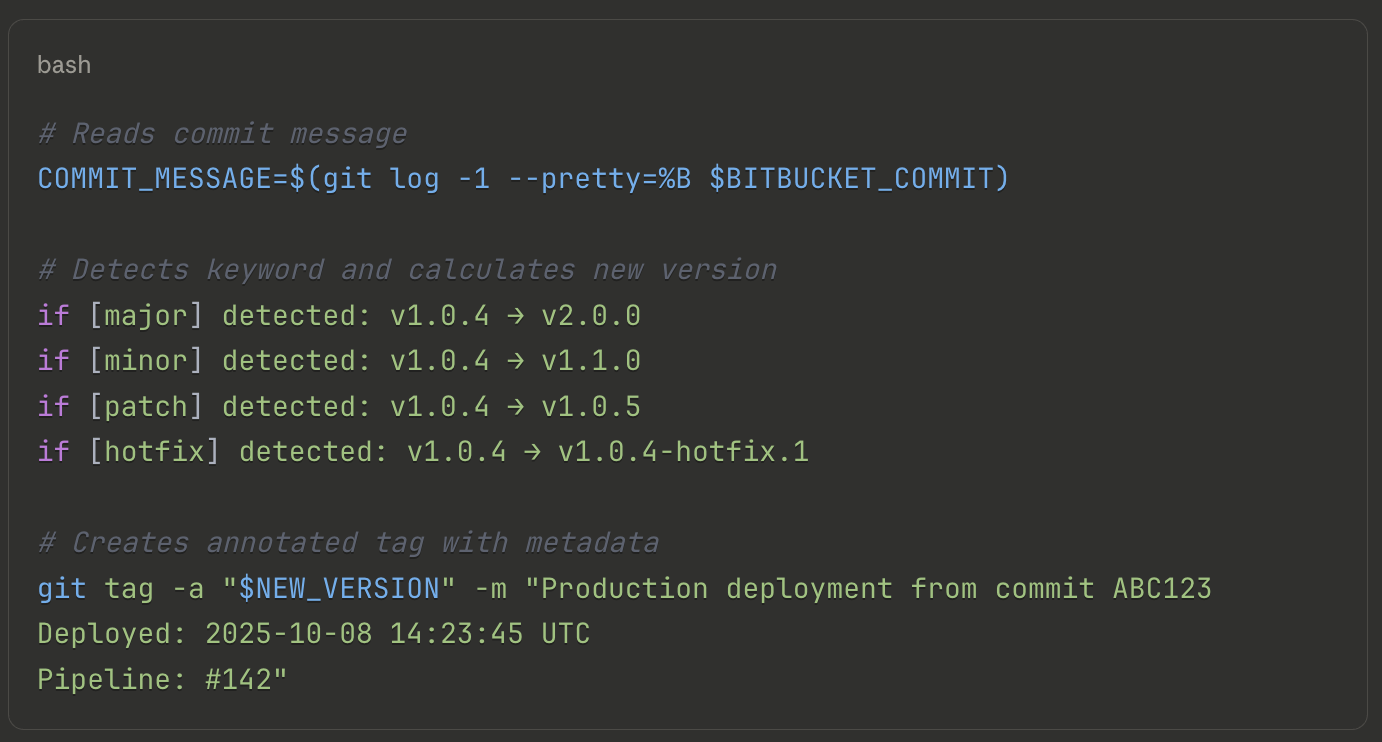
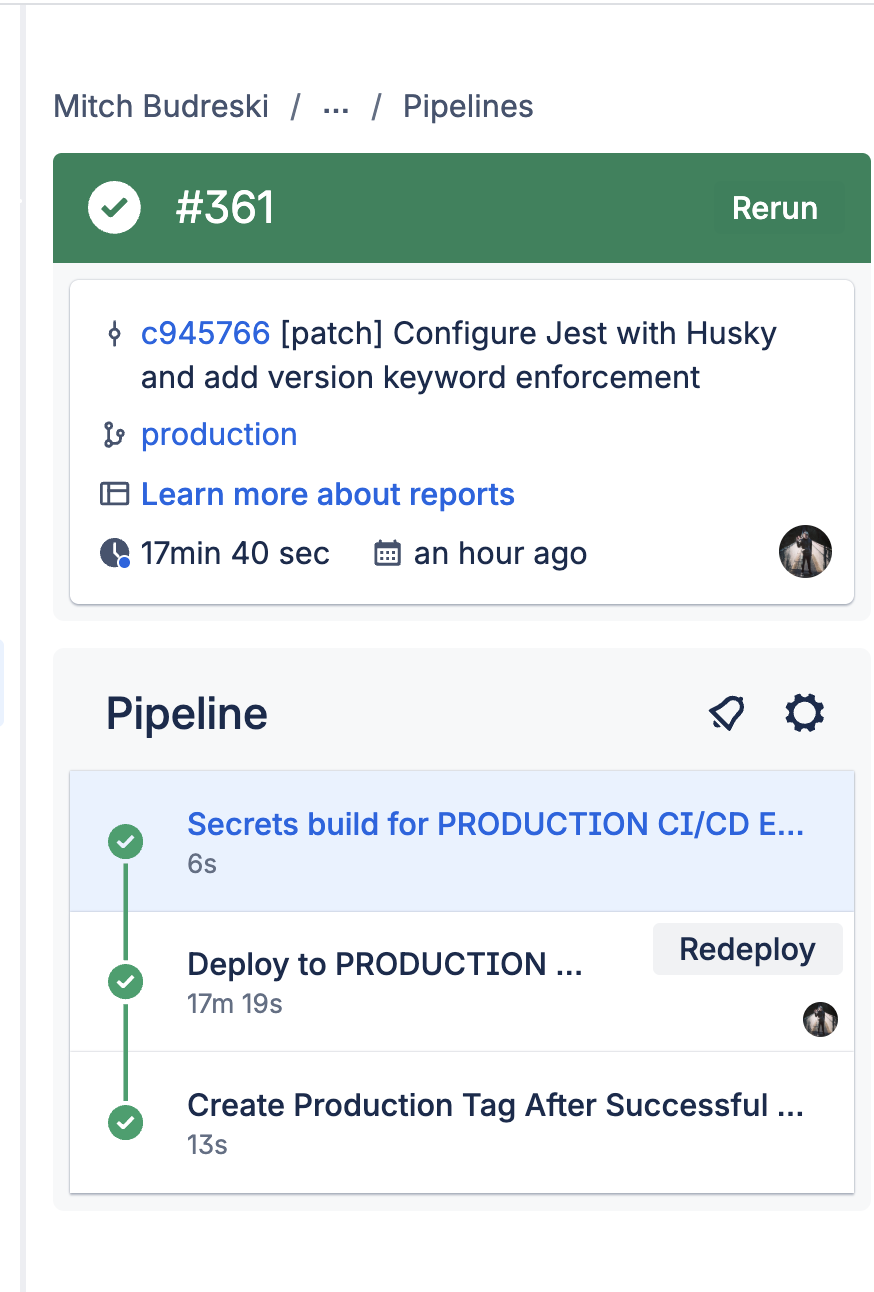
- Automatic tag creation after successful deployment
- Clear version history and deployment tracking
- Semantic versioning communicated to all stakeholders
Developer experience:
- Initial learning curve
- Slightly longer commit process
- Clearer expectations and reduced cognitive load
- Better confidence in code quality before push
- Reduced time debugging issues that should have been caught earlier
Stakeholder experience:
- Clear understanding of what's being released and when
- Automated notifications of production deployments
- Version numbers that communicate scope of changes
- Documentation that explains technical decisions in business context
- Confidence in release process and deployment quality
Lessons Learned
- Start simple with testing infrastructure - Two basic tests proved the system works. Expanding gradually prevents overwhelming the team.
- Automate what humans forget - Tagging was frequently forgotten. Automation ensures it happens every time.
- Branch-specific enforcement works well - Production requires strict rules, other branches have flexibility for experimentation.
- Documentation is stakeholder communication - README and blog posts serve both technical and business audiences.
- Semantic versioning requires discipline - Team must align on what constitutes major/minor/patch changes. This alignment happens in planning, not at commit time.
- Fast feedback loops matter - 0.1s test execution makes pre-commit hook non-disruptive. As tests grow, performance monitoring becomes critical.
- CI/CD pipeline orchestration enables sophisticated workflows - Moving tagging to post-deployment ensures tags only exist for successfully deployed code.
Conclusion
Version 1.1.1 establishes critical infrastructure for quality, consistency, and observability in our development process. By combining automated testing, semantic versioning, CI/CD orchestration, and comprehensive documentation, we've created a foundation that scales with the project.
The true value of this release isn't just the technical implementation—it's the alignment it creates between development, project management, and stakeholder communication. Version numbers now mean something concrete. Releases are documented and traceable. Progress is visible to everyone.
As we continue the Meteor 3.3/React 18 refactor on the QA branch, this infrastructure provides the testing framework, release workflow, and communication structure needed for a successful migration. Future blog posts will continue this pattern, documenting technical changes alongside business context, ensuring the entire team understands both how and why we build what we build.