see all blog articles

v1.1.2 | Traceable Cosmetic Cnhancements

Author Image

Mitch Budreski

Principal | Full Stack Developer

Team Member

🎤 mmHMM It's been a long time coming for some minor cleanup.

Subject: Semantic Versioning Implementation - Enhanced Traceability & Stakeholder Communication

Following up on today's discussion about integrating semantic versioning into our build script.

Why This Matters:

Semantic versioning gives us tag-based rollback capability. Every deployment gets a specific version tag (like v1.1.1 shown in the screenshots), making it trivial to roll back code changes or aesthetic tweaks when needed. Instead of hunting through commit hashes, we reference clean version numbers.

odd overlaps

and funky alignment

padding issues

spacing issues

Automated Stakeholder Communication:

The build automation differentiates between:

  • Patch releases (v1.1.1 → v1.1.2): Bug fixes, quick updates
  • Minor releases (v1.1.1 → v1.2.0): New features, enhancements
  • Major releases (v1.1.1 → v2.0.0): Breaking changes, significant overhauls

Stakeholders receive appropriate notifications based on release type - no more alert fatigue from minor CSS tweaks, but clear visibility on feature drops.

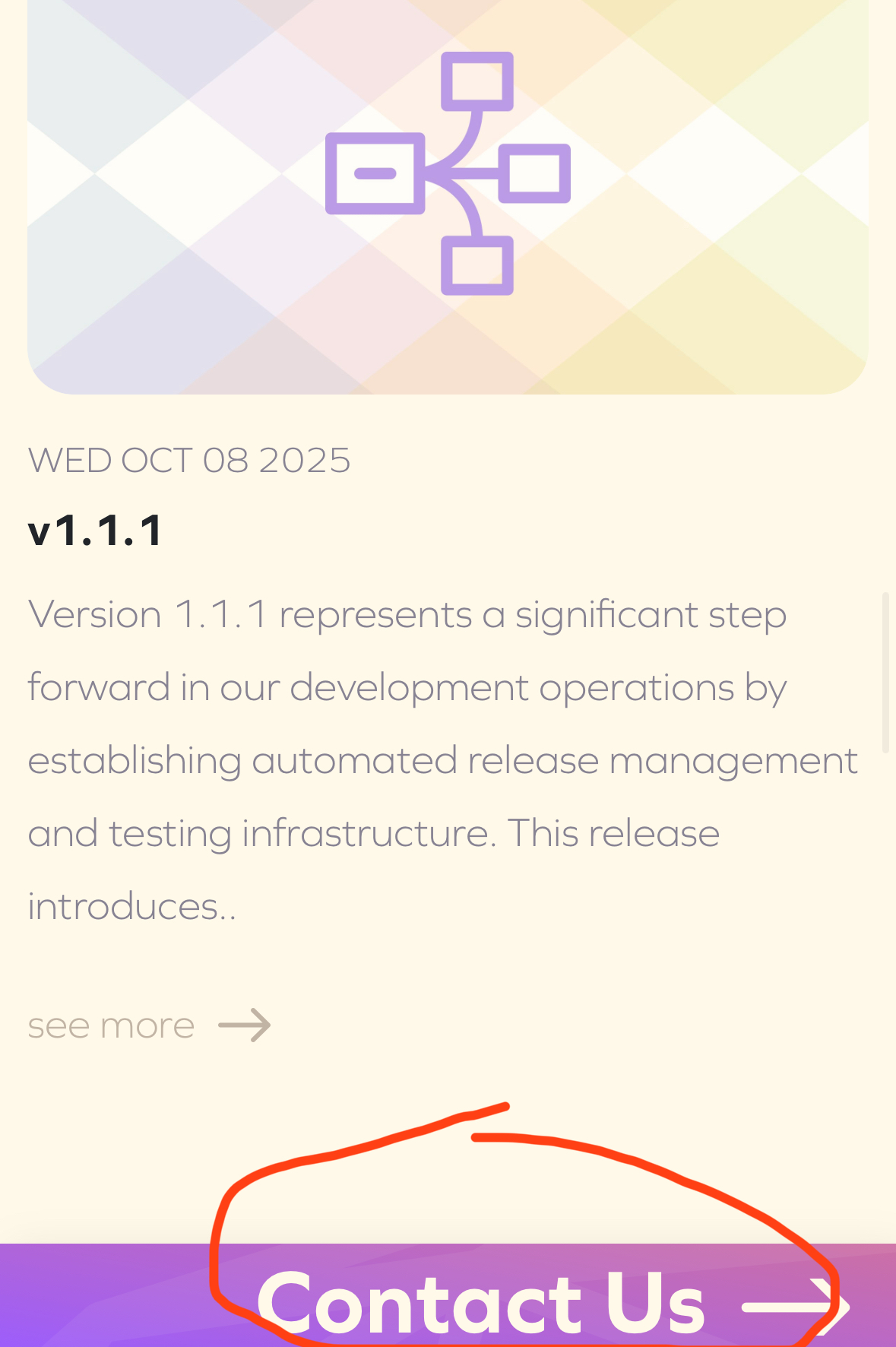
Article card with pastel geometric diamond pattern background at top featuring purple sitemap icon. Content shows date 'WED OCT 08 2025', bold version number 'v1.1.1', and gray text describing automated release management and testing infrastructure. 'see more' link with arrow below. Bottom section features purple gradient banner with white text 'Contact Us' and arrow, highlighted by hand-drawn red circle annotation.
now there's enhancements

The Foundation-First Approach:

Addressing structural concerns like versioning and branching before rapid cosmetic changes might feel counterintuitive when there's pressure for visible updates. However, without these foundations, every CSS tweak becomes a potential source of confusion - which version is live? what changed? can we safely roll back? The upfront time investment in proper structure pays exponential dividends by eliminating deployment ambiguity, reducing rollback anxiety, and creating clear audit trails. It's the difference between building on solid ground versus constantly patching a shaky foundation.

Strategic Balance Through Clear Communication:

The real power lies in how these systems enable differentiated communication across multistakeholder teams. With proper versioning and branching strategies, we can clearly delineate what qualifies as a hotfix (patch-level CSS adjustments, minor bug fixes) versus what requires comprehensive planning cycles (major refactors, architectural changes, feature releases). This clarity allows design teams to understand when their feedback can be implemented immediately versus when it needs to flow through technical analysis and organizational planning. Product owners get visibility into what's a quick win versus what needs sprint planning. Leadership can distinguish between routine maintenance and initiatives requiring cross-functional coordination and resource allocation. The communication framework we build around versioning doesn't just track code - it aligns organizational expectations around velocity, complexity, and risk.


Author Image

Mitch Budreski

Principal | Full Stack Developer